Whose trauma wins?
Emma Marriott
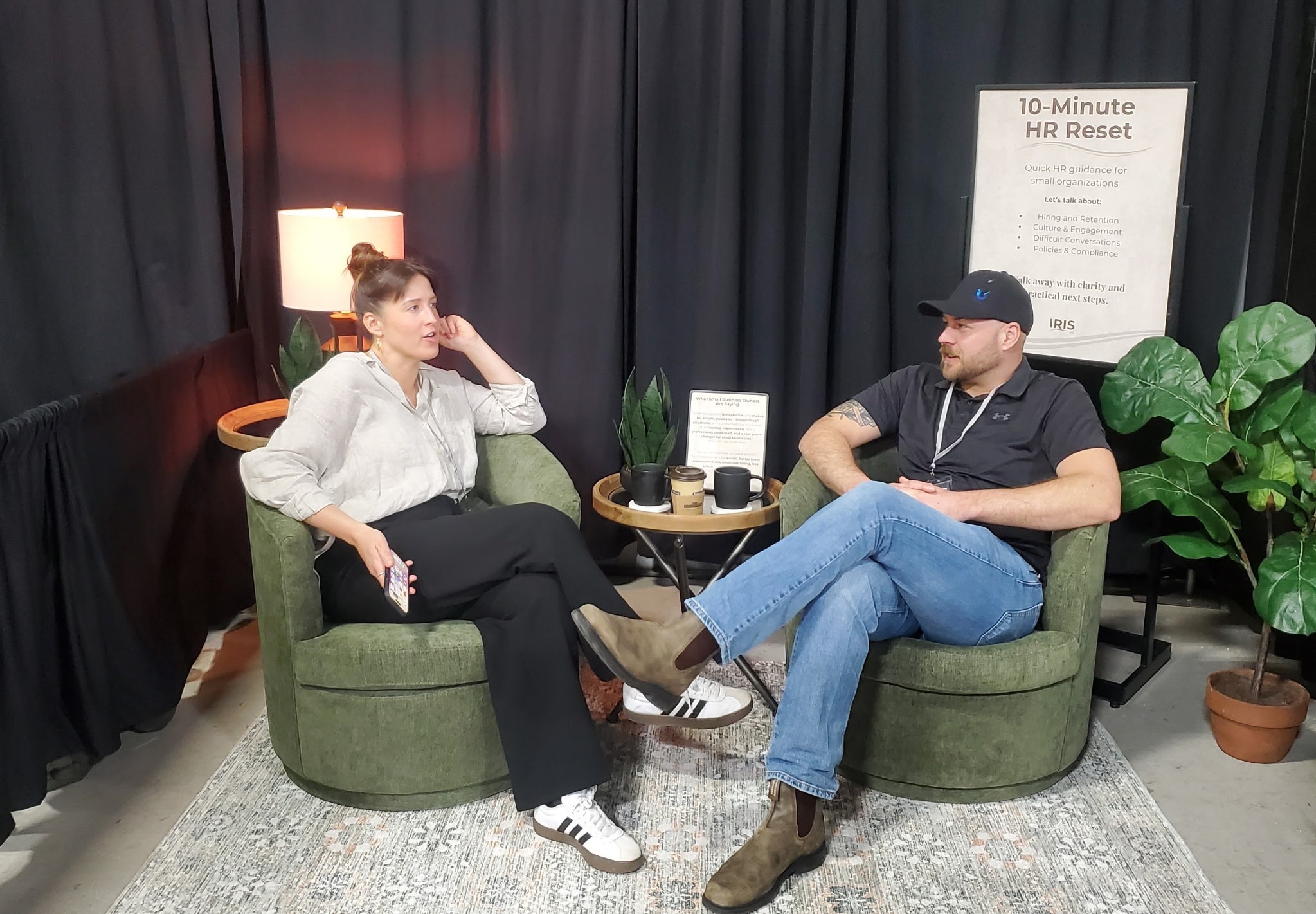
“Whose trauma wins… yours or mine?”
I’ve heard versions of this question come up more than once in conversations about conflict, triggers, and emotional safety at work.
And the more I sit with it, the more I think we are asking the wrong question entirely.
Because if we are framing human experience as something to win, we have already lost the point.
Workplaces are not arenas for comparing pain. They are environments where people bring their whole selves, whether we acknowledge that or not.
And that means something important: most of us are walking into work carrying something. We are all carrying something.
We tend to talk about trauma, triggers, and emotional responses as if they are exceptions. But in reality, they are part of the human experience. We are aware of our own triggers. Sometimes we are even aware of other people’s.
But awareness alone does not resolve anything.
Awareness is the starting point, not the solution.
What matters more is what happens next.
Triggers are inevitable. Responsibility is still required.
This is where things often get uncomfortable, but also where growth actually happens.
Yes, we are responsible for how we respond when we are triggered.
That means building the skills to regulate ourselves. It means learning how to communicate clearly instead of reacting impulsively. It means taking ownership of our behaviour, even when something gets activated in us.
But responsibility does not exist in a vacuum.
We are also human beings in relationship with other human beings.
And that means environment matters.
Healthy workplaces are not built on “deal with it yourself”
There is a quiet myth in some workplaces that professionalism means self-containment. That the best employees are the ones who never show impact, never express emotion, and never need support.
That is not professionalism. That is suppression.
Healthy environments are built differently. They are built on:
Calling things out with intention, not blame
Creating space for honest conversations
Supporting each other without becoming each other’s therapist
Helping people access the right support when they need it
This is not about taking responsibility away from individuals. It is about recognizing that people function better when they are not doing everything alone.
Compassion does not mean over-functioning
One of the biggest shifts for me has been learning the difference between compassion and responsibility for others’ emotional processing.
I can be compassionate toward someone’s experience without taking ownership of it.
I can understand someone is triggered without becoming responsible for fixing it. That distinction matters more than we talk about.
Because when we blur it, two things tend to happen:
People burn out from over-supporting others.
Or people withdraw completely to protect themselves.
Neither creates healthy work.
The most important validation still has to come from within
Another shift for me has been around validation.
There is nothing wrong with wanting to be understood. In fact, most of us do. But if we rely on external validation to regulate our internal state, we eventually run into problems. At the end of the day, I am the only one who fully knows what I need in a given moment.
That means I am responsible for my own peace.
And expecting others to always meet that need will leave me frustrated, even in well-intentioned environments.
So what does better look like?
Better is not about removing triggers or avoiding hard moments. That is not realistic.
Better is about how we move through those moments together.
It looks like people being able to say, “I am activated right now, I need a moment,” without shame.
It looks like colleagues being able to respond with curiosity instead of defensiveness.
It looks like leadership that does not collapse emotional complexity into performance issues.
And it looks like people being supported to get the help they need, instead of being expected to process everything inside the workplace.
So maybe the question is not who wins
We keep asking, “Whose trauma wins?”
But that framing turns human experience into competition.
And there is no healthy outcome in that.
Maybe the better question is: How do we make sure no one has to lose?
Because the goal is not to decide whose experience matters more.
The goal is to build environments where people can actually work, relate, and recover without harm being the cost of participation.
That is what better looks like.